As the accompanying video deftly illustrates, achieving superior gas mileage is not about investing in dubious gadgets or falling for marketing ploys. Instead, genuine improvements in your vehicle’s fuel efficiency stem from adopting sensible maintenance practices and cultivating mindful driving habits. These are not secret tricks, but rather fundamental principles of automotive operation that, when consistently applied, yield tangible results in your wallet and reduce your environmental footprint.
Debunking Fuel-Saving Myths: Why Gimmicks Fail
The allure of an easy fix for high fuel costs is understandable. Products claiming to dramatically boost your miles per gallon with a simple plug-in or additive frequently appear on the market. However, as the video’s mechanic wisely points out, if these devices genuinely delivered on their promises, automotive manufacturers would integrate them into every vehicle. Vehicle engineers are under immense pressure to design cars with optimal fuel economy and performance. Consequently, any legitimate breakthrough in efficiency would quickly become a standard feature, not a third-party accessory.
Most modern engines are already highly optimized. They operate within precise parameters, managed by sophisticated electronic control units (ECUs) that govern everything from fuel injection to ignition timing. Introducing an unregulated device into this system often does more harm than good, potentially disrupting finely tuned sensors or altering the fuel-air mixture in an inefficient way. Thus, while the search for a magical solution persists, the reality is that the most effective strategies for improving gas mileage are far more practical and grounded in established automotive science.
Precision is Power: The Critical Role of Tire Pressure
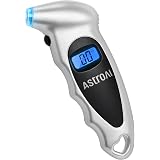
One of the most straightforward and impactful adjustments you can make for better fuel economy is ensuring your tires are correctly inflated. Underinflated tires are a significant culprit in reduced gas mileage. This occurs because lower pressure increases the tire’s rolling resistance against the road surface. More of the tire’s rubber makes contact with the pavement, creating greater friction. Your engine, consequently, must work harder to overcome this increased resistance, demanding more fuel.
Furthermore, improperly inflated tires can lead to uneven tire wear, reducing their lifespan and necessitating earlier replacement. To ascertain the correct tire pressure for your vehicle, consult your owner’s manual or the sticker located inside your driver’s side door jamb. Always check tire pressure when the tires are cold—meaning the vehicle has been stationary for at least three hours or has not been driven more than a mile. Even a slight deviation from the recommended pressure can impact your fuel consumption and safety. Maintaining appropriate tire pressure can improve fuel efficiency by up to 3% in some cases, a small but consistent saving that adds up over time.
Breathing Easy: The Importance of a Clean Air Filter
An internal combustion engine relies on a precise mixture of air and fuel to operate efficiently. Your car’s engine consumes thousands of cubic feet of air for every gallon of fuel it burns. The air filter’s crucial role is to prevent dirt, dust, pollen, and other debris from entering the engine’s combustion chambers. Over time, this filter becomes clogged with contaminants, restricting the vital airflow into the engine.
When the engine cannot “breathe” properly due to a dirty air filter, its performance suffers. It might struggle to accelerate, and more importantly for fuel economy, the air-fuel mixture can become unbalanced. A fuel-rich mixture, where there isn’t enough air for complete combustion, means more fuel is consumed for less power. This directly translates to wasted fuel and reduced gas mileage. While the direct impact on fuel economy from a dirty air filter can vary, a severely clogged filter can decrease efficiency by up to 10%, particularly in older, carbureted vehicles. Even in modern cars, a clean air filter ensures optimal engine performance and efficiency, preserving your fuel savings.
Master Your Drive: Adopting Moderate Driving Habits
Perhaps the most significant variable in determining your vehicle’s fuel efficiency is your driving style. Aggressive driving, characterized by rapid acceleration, sudden braking, and excessive speeding, is an undeniable fuel killer. Every time you rapidly accelerate, your engine spins faster, demanding a richer fuel mixture to generate power quickly. Conversely, hard braking wastes the kinetic energy that your engine worked to create, dissipating it as heat through your brakes rather than using it to propel the vehicle efficiently.
The Cost of Speed: Aerodynamics and Fuel Use
Consider the impact of speed on fuel consumption. As your vehicle’s speed increases, aerodynamic drag becomes a much more significant factor. Air resistance exponentially increases with speed; driving at 70 mph uses substantially more fuel than driving at 60 mph. Maintaining a consistent speed, ideally utilizing cruise control on highways, allows your engine to operate at its most efficient RPM (revolutions per minute) range. This prevents unnecessary fluctuations in fuel delivery and minimizes the energy lost to overcoming wind resistance.
Smooth Operator: Benefits of Gentle Acceleration and Braking
The practice of “hypermiling,” while sometimes taken to extremes, highlights the core principle of moderate driving: smooth inputs. Gentle acceleration and anticipation of traffic flow, which allows for gradual deceleration rather than abrupt stops, significantly reduce the engine’s workload and fuel demands. Observing traffic conditions ahead and planning your movements can prevent unnecessary braking and re-acceleration, thereby conserving fuel. Adopting a moderate driving style can improve your gas mileage by an estimated 10-40% depending on the driver’s prior habits and driving conditions.
Lighten the Load: Uncluttering for Better Fuel Economy
The final, yet often overlooked, factor in maximizing fuel efficiency is the weight your vehicle carries. The laws of physics dictate that the heavier an object is, the more energy is required to set it in motion and keep it moving. This principle applies directly to your car. Every extra pound your vehicle carries necessitates more fuel consumption, especially during acceleration and when driving uphill.
Many drivers accumulate unnecessary items in their trunks, backseats, and even glove compartments over time. While individual items may seem negligible, their combined weight can be substantial. For instance, carrying around heavy tools, sports equipment that’s not actively being used, or even a collection of old newspapers can add dozens, if not hundreds, of pounds. Periodically decluttering your vehicle and removing items you don’t need for daily travel can contribute to better gas mileage. Studies indicate that for every 100 pounds removed from a vehicle, fuel economy can improve by 1-2%. This straightforward action requires no technical expertise, only a commitment to keep your vehicle lean and efficient.
By diligently applying these practical and proven strategies—maintaining correct tire pressure, ensuring a clean air filter, practicing moderate driving habits, and reducing vehicle weight—you can achieve significant and sustainable improvements in your gas mileage and overall fuel efficiency. These methods, unlike deceptive quick fixes, offer genuine economic benefits and enhance your vehicle’s longevity.
Fueling Your Efficiency: Your Questions Answered
What is the best way to improve my car’s gas mileage?
The best way to improve your car’s gas mileage is by practicing sensible car maintenance and adopting mindful driving habits, rather than relying on special gadgets.
Should I buy aftermarket gadgets that claim to save fuel?
It’s best to avoid such gadgets because modern engines are already highly optimized, and these unregulated devices often disrupt finely tuned systems, doing more harm than good.
How does tire pressure affect my car’s fuel efficiency?
Underinflated tires increase rolling resistance, making your engine work harder to move the car and consume more fuel. Keeping tires correctly inflated improves efficiency.
Why is a clean air filter important for good gas mileage?
A clean air filter ensures your engine gets enough clean air for efficient combustion. A dirty filter restricts airflow, leading to an unbalanced fuel-air mixture and wasted fuel.
Can my driving style really make a difference in gas mileage?
Yes, your driving style is a significant factor. Aggressive driving with rapid acceleration and sudden braking wastes a lot of fuel, while moderate and consistent driving is much more efficient.